

Understand medical language and medical terms
When you’re pregnant, you’ll often encounter a number of medical terms and abbreviations that can be confusing. These are used by doctors, midwives and other healthcare professionals to describe different aspects of pregnancy and foetal development.
Here’s a guide to some of the most common medical terms you’ll encounter during pregnancy:
Common terms about the stages and duration of pregnancy:
- GA (Gestational age): This refers to how many weeks the pregnancy has lasted, usually measured from the first day of the last menstrual period. It is a standard way to track the progress of pregnancy.
- Trimesters: Pregnancy is divided into three trimesters:
- First trimester: Weeks 0-12
- Second trimester: Weeks 13-27
- Third trimester: Week 28-birth
- Due date or EDC (Expected Date of Confinement): The expected date of birth, calculated from your last period or early scans.
Exams and scans:
- Ultrasound (UL) scan: An ultrasound scan is used to view images of the foetus and check its development and other pregnancy-related conditions. Ultrasound scans work by sending sound waves into the body and bouncing (reflecting) them back to a scanner with an image (an echo). It is used for example in nuchal translucency scans and malformation scans.
- Nuchal fold scan (1st trimester scan): A scan performed at weeks 11-14 to measure the thickness of the foetal nuchal fold, which can give an indication of the risk of chromosomal abnormalities such as Down syndrome.
- Malformation scan (2nd trimester scan): A scan at 18-22 weeks where the baby’s organs and development are thoroughly examined to check for malformations.
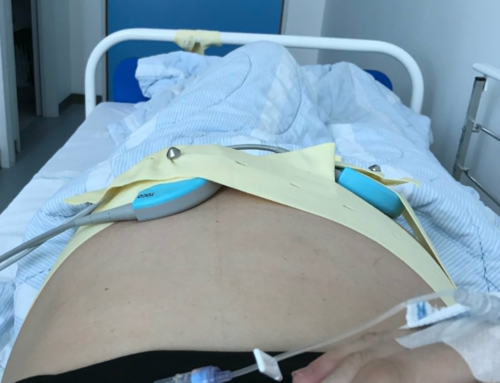
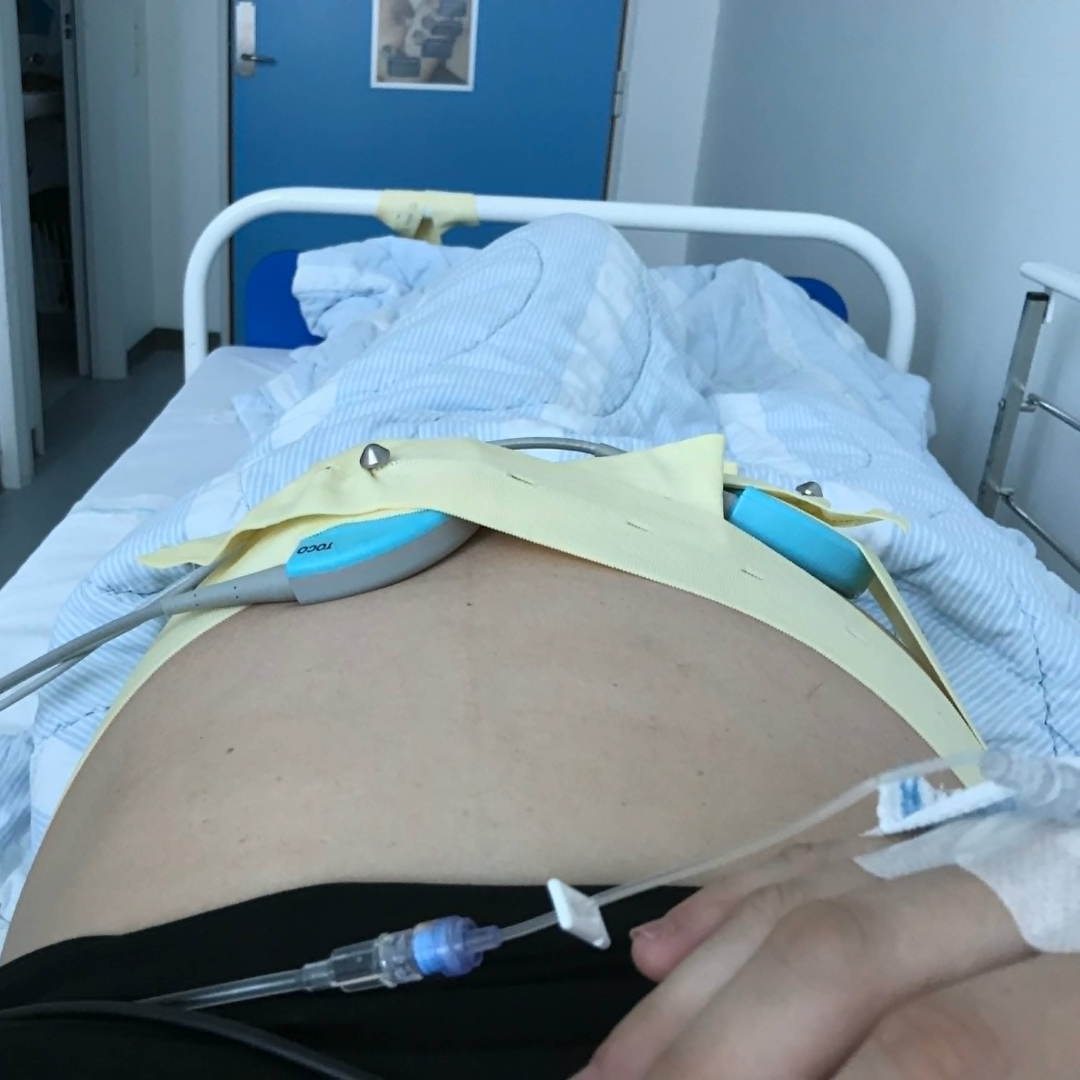
- CTG (Cardiotocography): A monitoring method used to monitor the fetal heart rate and detect any contractions. It is also used if placental function is suspected or if the pregnant woman seems to feel less life than before.
Physical symptoms and conditions of the pregnant woman:
- Hyperemesis gravidarum : A severe form of nausea and vomiting during pregnancy that may require medical treatment.
- Oedema: Swelling that typically occurs in the hands, feet and face due to fluid retention during pregnancy.
- Braxton-Hicks contra ctions: These are irregular contractions of the uterus that can start early in pregnancy but do not lead to labour.
- Pelvic pain / pelvic pain: Pain in the pelvis caused by the hormonal changes of pregnancy and the extra weight.
Pregnancy complications:
- Pre-eclampsia (pre-eclampsia): A condition where blood pressure becomes dangerously high – often accompanied by protein in the urine. It can be dangerous for both mother and baby and requires close monitoring. Despite the word poisoning, it has nothing to do with actual poisoning.
- Placenta previa (anterior placenta): A condition in which the placenta covers all or part of the cervix, which can cause complications during labour. It is typically detected on an ultrasound scan.
- Abruptio placentae (placental abruption): A condition where the placenta detaches prematurely from the uterine wall, which can be dangerous for the baby and requires prompt medical intervention.
- Gestational diabetes: A form of diabetes that occurs during pregnancy and requires special diet or treatment to regulate blood sugar levels. Gestational diabetes occurs in 2-3% of pregnant women. It typically occurs in the latter half of pregnancy when the body needs more insulin.
- Cervix (cervix): The length ofa cervix has a significant impact on whether you are at risk of preterm labour (premature birth). The cervix is considered too short if its length is less than 25 mm (2.5 cm) during pregnancy. It is measured via ultrasound. If it falls below 15 mm (1.5 cm), it is considered a high-risk factor and usually requires prompt treatment. Treatment may consist of progesterone therapy, cerclage (cervical closure) which is a surgical procedure where the cervix is sewn together to keep it closed, or a cervical pressar, which is a small silicone device that can help relieve pressure on the cervix.
Labour and birth preparation:
- VE (Vaginal Examination): An examination where the doctor or midwife assesses the maturity of the cervix and whether it is beginning to open before labour.
- Contractions: Contractions ofthe uterus that help open the cervix and push the baby out during labour. They can be regular (active contractions) or irregular (plucking contractions).
- Sectio (caesarean section): An operation where the baby is delivered through an incision in the abdomen and uterus. Can be either planned (elective) or emergency.
- Episiotomy: A surgical cut in the perineum (the area between the vagina and anus), sometimes performed to facilitate the birth of the baby and prevent uncontrolled tearing.
- S-drop (Syntocinon drip): A form of medical contraceptive stimulation using synthetic oxytocin, administered as an IV to induce or enhance labour.
- Apgar score: A quick assessment of a newborn baby’s condition immediately after birth. It is used to determine if the baby needs urgent medical attention. The score is assessed at one minute and five minutes after birth (and again at ten minutes if necessary). The Apgar score is a quick overview and not a long-term prognosis of the baby’s health.
- Corrected age: Is the baby’s age calculated based on the original due date (40 weeks) and not the date of birth. It is used to assess the growth and development of children born prematurely (before 37 weeks). Most often, the corrected age is not used for more than 2 years of age, as most premature babies have caught up with what they may have fallen behind.
Other relevant terms:
- Fetal presentation: The position ofthe foetus in the womb close to birth. The most common and desired presentation is the head-down position.
- Meconium: The baby’s first faeces, which is a greenish-black substance that can be released during labour. Meconium in the amniotic fluid can be a sign that the baby is stressed.
- Amniotic fluid: The fluid that surrounds and protects the foetus in the womb. If the amniotic fluid breaks (waters break), labour is often imminent.
Especially related to twin pregnancies:
- TTTS (Twin-to-Twin Transfusion Syndrome): Is a complication that can occur in a twin pregnancy where both foetuses share the same placenta (monochorionic twins). The condition is caused by an imbalance in blood flow between the two foetuses via connections in the placenta.
Two main types of twin pregnancies :
Twin pregnancies are primarily classified according to how the foetuses divide the placenta (chorion) and amnion. This depends on when in the fertilisation process the fertilised egg divides (for identical twins).
Fraternal twins / dizygotic twins (dizygotic):
- Develops from two separate eggs fertilised by separate sperm cells.
- Always dichoric diamniotic:
- Each twin has its own placenta and amniotic sac.
- Can be of the same or different sexes.
Identical twins (monozygotic):
- Develop from one fertilised egg that divides.
- Can further divide according to how they divide the placenta and amniotic membrane:
Four types of identical twins:
1. Dichoric diamniotic (Di/Di):
Each twin has its own placenta and amniotic membrane.
Occurs if the division takes place within the first 3 days after fertilisation.
Similar to fraternal twins in structure but genetically identical.
2. Monochoric diamniotic (Mo/Di):
- Common placenta, but separate amniotic membranes.
- Happens if the division occurs between days 4 and 8.
- The most common type among identical twins (approximately 70%).
- Risk of complications such as Twin-to-Twin Transfusion Syndrome (TTTS).
3. Monochorionic monoamniotic (Mo/Mo):
- Common placenta and common amniotic membrane.
- Happens if the division occurs between days 8 and 13.
- Rare, but associated with high risk, e.g. for tangled umbilical cords.
- Risk of complications such as Twin-to-Twin Transfusion Syndrome (TTTS).
4. Conjoined twins / Siamese twins (conjoined twins):
- Occurs if the splitting occurs after day 13.
- Extremely rare and occurs when the division is not completed.
These terms may seem technical and complicated, but they are used to describe the amazing and complex process that is pregnancy and labour. If you come across a term you don’t understand when talking to your doctor or midwife, it’s always a good idea to ask them to explain it – they are there to help you through the whole journey.






Leave A Comment